



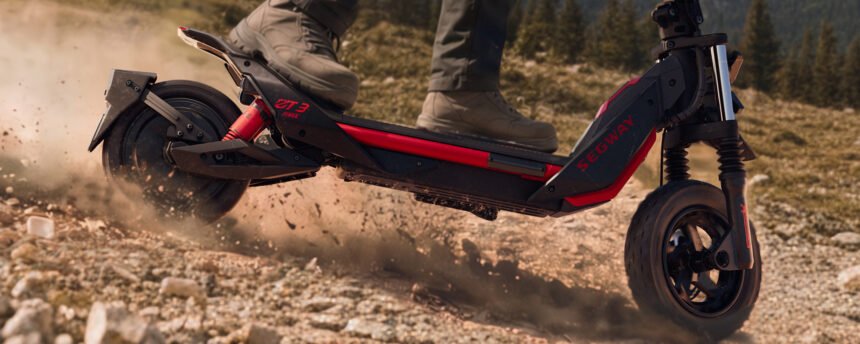
The Segway ZT3 MAX E is an electric scooter designed for riders who want more than a basic commuter. With a claimed maximum motor output of 2,200W, a 30% climbing capability under specified test conditions, and a dual hydraulic suspension system, it is built to handle hills, uneven roads, and mixed riding environments.
- Segway ZT3 MAX E at a Glance
- Motor Performance: What Does 2,200W Actually Mean?
- Hill Climbing: A Claimed Maximum Slope of 30%
- Suspension: Designed for Uneven Roads
- Braking Performance: Dual Disc Brakes and Combined Braking
- Battery and Range: Can It Really Travel 80 km?
- Tires, Traction Control, and Ground Clearance
- Lighting and Visibility
- Water Resistance and Battery Safety
- Segway ZT3 MAX E vs. ZT3 Pro E
- Pros and Cons
- Who Should Consider the Segway ZT3 MAX E?
- Final Verdict: Is the Segway ZT3 MAX E a Good Choice?
But impressive specifications do not automatically make a scooter the right choice for everyone. Its advertised range depends on riding conditions, its all-terrain design comes with practical trade-offs, and its weight matters if you need to carry it regularly.
In this review, we examine the ZT3 MAX E’s key specifications, climbing performance, suspension, braking system, battery, and everyday usability. We also compare it with the Segway ZT3 Pro E to help you decide whether the upgraded model is worth considering.
Editorial note: This review is based on the manufacturer’s published specifications and technical information. It is not a hands-on road test, so real-world performance observations are identified as expectations rather than personal test results.
Segway ZT3 MAX E at a Glance
The ZT3 MAX E combines a powerful rear-wheel-drive motor with a large battery, wide tubeless tires, and a suspension system intended for varied terrain. Its maximum speed in the European version is approximately 25 km/h, making its additional power particularly relevant to acceleration and climbing rather than a higher advertised top speed.
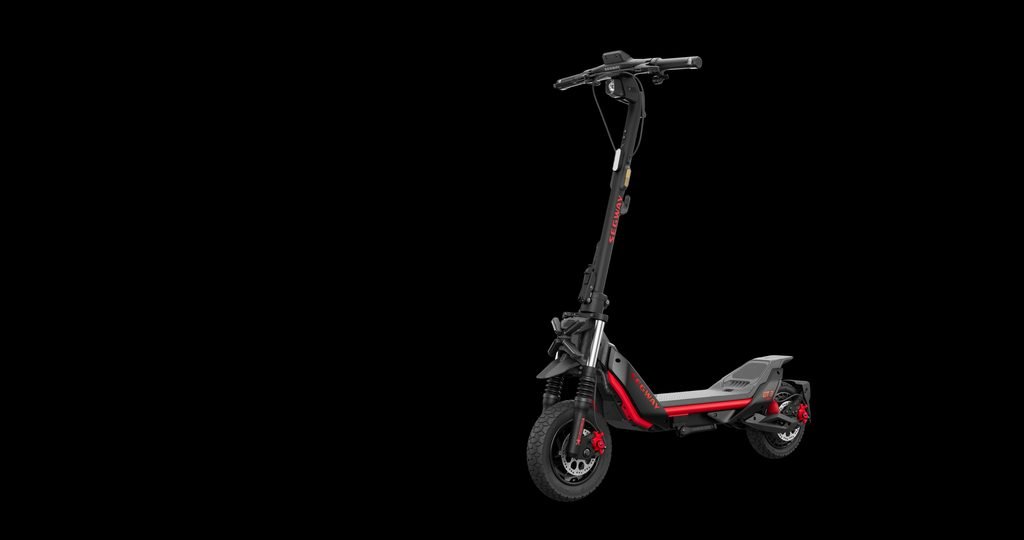
Key Specifications
| Feature | Segway ZT3 MAX E |
|---|---|
| Maximum motor power | 2,200W |
| Rated motor power | 850W |
| Peak torque | 43 N·m |
| Maximum speed | Approx. 25 km/h |
| Maximum climbing slope | 30% at a 75 kg rider weight |
| Maximum advertised range | Up to 80 km at 15 km/h |
| Range at 25 km/h | Up to 60 km |
| Battery energy | 717 Wh |
| Front suspension | Dual-crown hydraulic, two-stage design |
| Rear suspension | Dual-rate coil hydraulic suspension |
| Brakes | Dual mechanical disc brakes |
| Tires | 12 × 2.8-inch front; 11 × 2.8-inch rear |
These figures are manufacturer specifications, not guarantees of the performance every rider will experience. Actual range and climbing ability depend on factors such as rider weight, gradient, road surface, temperature, and riding style.
Motor Performance: What Does 2,200W Actually Mean?
One of the ZT3 MAX E’s most notable features is its 2,200W maximum motor output. For comparison, the ZT3 Pro E has a published maximum power rating of 1,600W.
That represents a 37.5% increase in maximum power on paper. The rated power also increases from 650W on the ZT3 Pro E to 850W on the ZT3 MAX E.
However, maximum power is not the same as continuous power. Peak output describes the motor’s maximum available power under specified conditions, while rated power is a more useful reference for its nominal operating output.
How does this affect everyday riding?
Additional motor power can help a scooter accelerate more confidently and maintain momentum when climbing, particularly when carrying a heavier load. It may also provide more reserve power when the road surface becomes demanding.
The ZT3 MAX E’s advertised peak torque of 43 N·m supports its positioning as a hill-capable scooter. Nevertheless, motor output alone cannot determine how quickly it accelerates or how well it handles every gradient. Battery state, controller limits, traction, and rider weight all influence the result.
For riders who mainly travel on flat roads at moderate speeds, the additional power may be less important than price, weight, and battery capacity.
Hill Climbing: A Claimed Maximum Slope of 30%
Segway specifies a maximum climbing slope of 30% for the ZT3 MAX E, measured with a 75 kg rider. The ZT3 Pro E is rated for a maximum climbing slope of 25% under the same stated rider-weight condition.
These figures suggest an advantage for the newer model on steep routes, but the distinction between slope percentage and angle is important.
A 30% gradient means a rise of 30 units for every 100 horizontal units. It does not mean a 30-degree incline.
| Climbing specification | ZT3 MAX E | ZT3 Pro E |
|---|---|---|
| Maximum stated slope | 30% | 25% |
| Reference rider weight | 75 kg | 75 kg |
| Maximum motor power | 2,200W | 1,600W |
A scooter’s maximum climbing figure is generally a controlled-test specification. It should not be interpreted as a guarantee that it can climb every road with that gradient, especially if the surface is loose, wet, or uneven.
For riders who regularly encounter steep streets or hilly routes, the ZT3 MAX E’s higher published rating is a meaningful advantage to investigate.
Suspension: Designed for Uneven Roads
Suspension is particularly important on an electric scooter because small wheels can transmit road imperfections directly to the rider. Potholes, broken asphalt, gravel, and uneven transitions can make a rigid scooter uncomfortable and harder to control.
The ZT3 MAX E uses a dual hydraulic suspension setup, with a dual-crown design at the front and a dual-rate coil hydraulic system at the rear.
Front dual-crown hydraulic suspension
The front suspension uses a two-stage design intended to respond to different levels of impact. The first stage is intended to deal with smaller bumps, while the second provides additional support for larger impacts.
This approach is useful in principle because rough roads rarely present obstacles of a single size. A suspension system must respond to repeated small vibrations while also offering sufficient support when the wheel encounters a larger bump.
Rear hydraulic suspension and 50 mm travel
The published suspension travel is 50 mm. Travel indicates how far the suspension can move to absorb an impact; it does not, by itself, establish how comfortable the ride will be.
Suspension performance also depends on damping, spring characteristics, tire pressure, and rider weight. Without an independent ride test, it would be premature to claim that the ZT3 MAX E is more comfortable than every competing scooter.
Still, its hydraulic suspension hardware makes it a compelling option to consider for riders whose regular routes include uneven pavement and light off-road sections.
Braking Performance: Dual Disc Brakes and Combined Braking
Motor power is only one part of a scooter’s performance. Effective braking is essential when approaching junctions, descending hills, or reacting to unexpected obstacles.
The ZT3 MAX E uses mechanical disc brakes at both wheels and Segway’s Intelligent Combined Braking System.
Intelligent Combined Braking System
The combined braking system is designed to coordinate braking and electronic assistance. The goal is to provide more balanced deceleration rather than relying on the rider to manage every aspect of braking independently.
Its practical benefit will still depend on road conditions, tire grip, brake adjustment, and the rider’s technique. Electronic assistance cannot overcome a lack of traction on slippery surfaces.
Dual 140 mm disc brakes
The model’s published specifications identify dual 140 mm mechanical disc brakes. Larger discs can offer advantages in braking leverage and heat management, depending on the complete brake design.
Segway also lists a braking distance of approximately 4.62 metres from 25 km/h under its stated test conditions. This should be treated as a manufacturer-reported figure rather than a universal stopping distance.
Wet roads, loose gravel, worn brake pads, tire condition, and rider reaction time can all change the distance required to stop safely.
Practical takeaway: Check the brakes regularly, maintain suitable tire pressure, and allow additional stopping distance when riding in rain or on unfamiliar surfaces.
Battery and Range: Can It Really Travel 80 km?
The ZT3 MAX E has a nominal battery energy rating of 717 Wh, compared with 597 Wh for the ZT3 Pro E. The larger battery provides more stored energy, although it does not guarantee a proportional increase in real-world range.
Segway advertises two principal range figures for the MAX E:
| Riding speed | Advertised range |
|---|---|
| 15 km/h | Up to 80 km |
| 25 km/h | Up to 60 km |
The difference illustrates an important point: travelling faster generally consumes more energy per kilometre, reducing the distance available from a single charge.
The 80 km figure is best understood as a maximum under specified test conditions, not a promise that every rider will cover that distance.
What affects the actual range?
Several factors can reduce the distance achieved in everyday use:
- Frequent acceleration and braking.
- Steep hills and sustained climbs.
- Higher rider weight or additional cargo.
- Low temperatures, strong headwinds, and unsuitable tire pressure.
- Rough surfaces and riding at higher speeds.
If your daily journey includes significant elevation changes, it is sensible to leave a battery reserve rather than plan every trip around the maximum advertised figure.
Battery management and charging
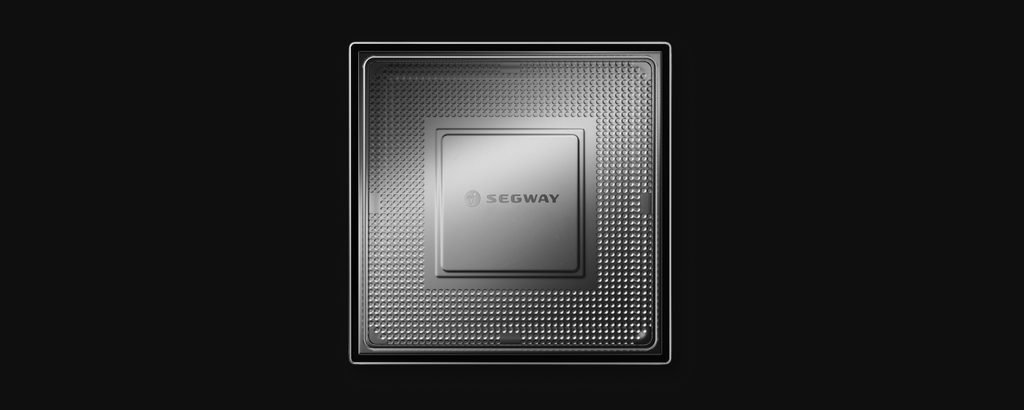
The scooter uses a battery management system designed to monitor the battery and provide protective functions. The supplied technical information also lists a single-charge duration of approximately 7.1 hours.
That charging time should be treated as an estimate under the relevant charging conditions. Actual charging duration may vary with battery temperature, remaining charge, charger specifications, and charging behaviour.
Before purchasing, check the regional version’s manual for the supported charging features and the recommended operating and storage conditions.
Tires, Traction Control, and Ground Clearance
The ZT3 MAX E uses different tire sizes at the front and rear:
| Component | Specification |
|---|---|
| Front tire | 12 × 2.8 inches |
| Rear tire | 11 × 2.8 inches |
| Tire construction | Tubeless all-terrain |
| Ground clearance | 172 mm |
| Traction control | TCS |
The relatively wide tubeless tires are intended to support riding across different surfaces. Tubeless construction can also reduce some puncture-related inconveniences, although it does not make the tires puncture-proof.
Traction Control System (TCS)
Traction control is intended to reduce wheel slip when grip is limited. This can be useful on dusty roads or other surfaces where the rear wheel might otherwise lose traction during acceleration.
It is not a substitute for careful riding. Wet leaves, mud, loose gravel, and polished surfaces can remain hazardous even with electronic traction assistance.
Ground clearance
The listed 172 mm of ground clearance helps explain the scooter’s all-terrain positioning. Greater clearance can reduce the likelihood of the underside contacting certain obstacles, but it does not mean the scooter is suitable for every off-road trail.
Large rocks, deep ruts, steep drops, and unstable ground remain outside what should be assumed safe from the specification alone.
Lighting and Visibility
The published equipment includes a 6W headlight with a stated illumination distance of up to 32 metres, along with front and rear turn indicators.
| Lighting feature | Published specification |
|---|---|
| Headlight power | 6W |
| Stated illumination distance | Up to 32 m |
| Turn indicators | Front and rear |
A bright headlight and functioning indicators can help make a rider more visible, but visibility depends on positioning, weather, surrounding traffic, and the condition of the lights.
For night riding, use appropriate protective equipment and follow local road regulations. Do not assume that the stated illumination distance guarantees that every obstacle will be visible in time to react.
Water Resistance and Battery Safety
The battery’s water-resistance rating should not be confused with the rating for the complete scooter.
Segway’s regional product information distinguishes between the battery pack’s IPX7 rating and the scooter body’s IPX5 rating. These classifications describe different levels of protection and apply to different components.
IPX7 for the battery does not mean the entire scooter can safely be submerged. Likewise, a water-resistance rating does not remove the need to follow the manufacturer’s instructions for wet-weather riding, cleaning, charging, and storage.
After riding in wet conditions, inspect the scooter and follow the manual’s guidance before connecting it to a charger.
Segway ZT3 MAX E vs. ZT3 Pro E
The ZT3 Pro E is a useful comparison because it shares the same general all-terrain concept but has lower published motor power and a smaller battery.
| Specification | ZT3 MAX E | ZT3 Pro E |
|---|---|---|
| Maximum motor power | 2,200W | 1,600W |
| Rated motor power | 850W | 650W |
| Peak torque | 43 N·m | Not listed in the cited specifications |
| Maximum climbing slope | 30% | 25% |
| Battery energy | 717 Wh | 597 Wh |
| Range at 25 km/h | Up to 60 km | Up to 50 km |
| Maximum advertised range | Up to 80 km | Up to 70 km |
| Front suspension | Dual-crown hydraulic, two-stage | Double telescopic |
| Rear suspension | Dual-rate coil hydraulic | Spring suspension |
| Front and rear brakes | Mechanical disc brakes | Mechanical disc brakes |
| Tire sizes | 12-inch front, 11-inch rear | 11-inch all-road tires |
Specifications are based on the respective regional product listings; features and figures may vary by market.
Is the ZT3 MAX E worth the upgrade?
The MAX E has clear advantages on paper in maximum power, climbing capability, battery capacity, advertised range, and suspension design.
However, those improvements may not justify a price difference for every buyer.
If you mainly commute on smooth roads, travel short distances, and ride at moderate speeds, the ZT3 Pro E may already offer enough performance. If your routes include steep hills, rough surfaces, and longer journeys, the MAX E’s additional capability may be more relevant.
The best decision depends on the actual local prices, warranty, service availability, and the conditions in which you plan to ride.
Pros and Cons
Pros
- Strong published motor output: 2,200W maximum power and 43 N·m peak torque.
- Higher climbing rating: A claimed maximum slope of 30% under specified conditions.
- Large battery: 717 Wh nominal energy.
- Useful advertised range: Up to 60 km at 25 km/h or 80 km at 15 km/h.
- Hydraulic suspension: A dual-stage front design and hydraulic rear setup.
- All-terrain equipment: Tubeless tires, traction control, and 172 mm ground clearance.
- Dual disc brakes: Supported by an intelligent combined braking system.
Cons
- Advertised range is not guaranteed: Real-world distance can be considerably lower.
- Charging takes time: The listed single-charge duration is approximately 7.1 hours.
- All-terrain capability has limits: The specifications do not establish suitability for every trail or weather condition.
- Added capability may be unnecessary for some commuters: Riders on smooth, flat roads may not benefit much from the more powerful setup.
- Value depends on local pricing: The MAX E is not automatically the better purchase if the price premium is substantial.
Who Should Consider the Segway ZT3 MAX E?
The ZT3 MAX E is worth considering if your priorities include hill climbing, a larger battery, suspension designed for uneven roads, and the ability to handle more varied routes than a basic commuter scooter.
It is less compelling if your main needs are low weight, easy portability, or inexpensive short-distance travel. In those situations, a simpler scooter may be easier to live with.
Before buying, check the scooter’s actual weight and folded dimensions in your market, the local warranty, the availability of replacement tires and brake parts, and any regulations that apply to electric scooters where you live.
Final Verdict: Is the Segway ZT3 MAX E a Good Choice?
The Segway ZT3 MAX E presents a strong specification package for an all-terrain electric scooter. Its 2,200W maximum power, 30% claimed climbing slope, 717 Wh battery, and dual hydraulic suspension distinguish it from the ZT3 Pro E on paper.
Its biggest selling points are not simply the headline power figure. The combination of climbing capability, suspension hardware, tubeless tires, and battery capacity makes it an interesting option for riders whose routes are not consistently smooth or flat.
There are still important caveats. Advertised range should not be confused with guaranteed everyday range, braking figures depend on test conditions, and the benefits of the more advanced hardware need to be weighed against the purchase price and portability.
Our verdict: The Segway ZT3 MAX E looks promising for riders who need a powerful, suspension-equipped scooter for mixed terrain. Whether it is the best buy depends on local pricing and real-world performance evidence, so a direct comparison with alternatives is advisable before making a final decision.
Official Sources
Always check the specifications and applicable regulations for your own country before purchasing.